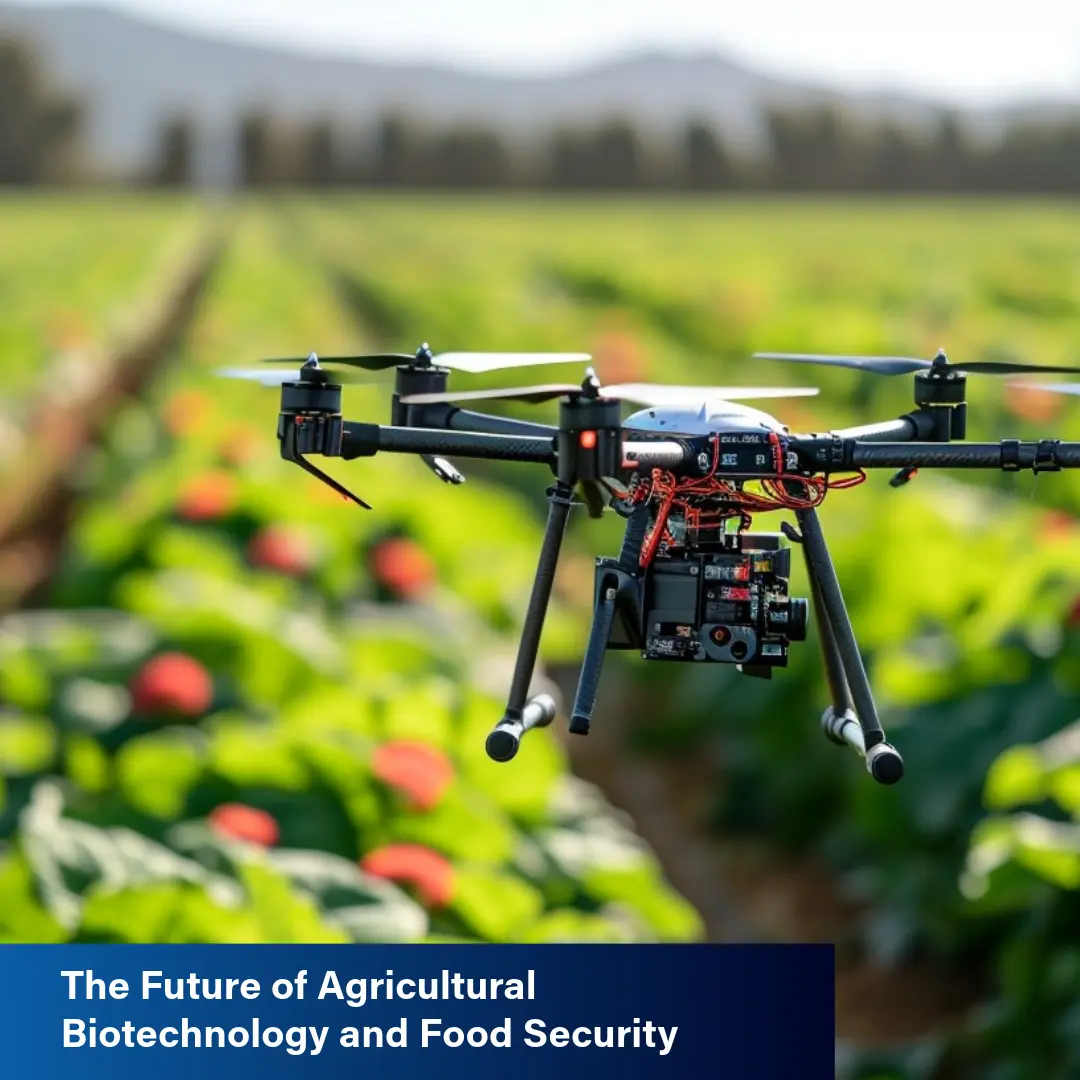
The Future of Agricultural Biotechnology and Food Security
As the world's population continues to grow and climate change places increasing pressure on agricultural systems, ensuring global food security has become one of the defining challenges of the 21st century. According to projections from international organisations, the global population could approach 10 billion people by 2050, requiring substantial increases in food production while simultaneously reducing agriculture's environmental footprint.
Traditional farming methods alone may not be sufficient to meet these demands. Agricultural biotechnology is emerging as a critical tool in helping farmers produce more food, use resources more efficiently and adapt to changing environmental conditions.
From gene-edited crops and biological crop protection products to precision agriculture and synthetic biology, agricultural biotechnology is transforming the way food is produced. The innovations being developed today have the potential to increase crop yields, improve nutritional value, reduce waste and strengthen the resilience of global food systems.
As governments, investors, researchers and agricultural companies seek solutions to food security challenges, agricultural biotechnology is poised to play an increasingly important role in feeding future generations.
Understanding Agricultural Biotechnology
Agricultural biotechnology refers to the application of biological science and technology to improve plants, animals, microorganisms and agricultural processes.
The field encompasses a wide range of technologies, including:
- Genetic engineering
- Gene editing
- Molecular breeding
- Synthetic biology
- Agricultural genomics
- Biological crop protection
- Biofertilisers
- Precision agriculture technologies
- Agricultural data analytics
These technologies are designed to improve agricultural productivity, sustainability and resilience while helping farmers address challenges such as pests, disease, drought, soil degradation and changing climate conditions.
The Food Security Challenge
Food security exists when people have reliable access to sufficient, safe and nutritious food to support healthy lives.
However, several factors are placing increasing pressure on global food systems:
Population Growth: The world's population continues to expand, increasing demand for food, animal feed and agricultural commodities.
Meeting future demand will require significant improvements in agricultural productivity without proportional increases in land use.
Climate Change: Rising temperatures, changing rainfall patterns, droughts, floods and extreme weather events are already affecting agricultural production in many regions.
Farmers must adapt to increasingly unpredictable growing conditions while maintaining crop yields and food quality.
Limited Arable Land: Urbanisation, soil degradation and environmental pressures are reducing the availability of productive farmland.
Increasing agricultural output through expansion alone is not a sustainable solution.
Water Scarcity: Agriculture accounts for a substantial proportion of global freshwater consumption.
Future food production systems will need to become significantly more water-efficient.
Pest and Disease Pressure: Emerging plant diseases, invasive species and evolving pest resistance continue to threaten agricultural productivity worldwide.
Biotechnology is helping develop new tools to address these challenges more effectively.
Gene Editing: A New Era for Crop Development
One of the most exciting developments in agricultural biotechnology is the emergence of gene editing technologies such as CRISPR.
Unlike traditional genetic modification approaches, gene editing enables scientists to make precise changes within an organism's existing DNA.
Potential applications include:
- Drought-tolerant crops
- Heat-resistant crop varieties
- Improved disease resistance
- Enhanced nutrient content
- Reduced food waste through longer shelf life
- Increased crop yields
Gene editing can significantly accelerate crop development timelines compared to conventional breeding methods, helping farmers access improved varieties more quickly.
As regulatory frameworks continue to evolve, gene-edited crops are expected to play an increasingly important role in global agriculture.
Biological Crop Protection: Moving Beyond Traditional Chemicals
Growing concerns regarding environmental sustainability and pesticide resistance are driving interest in biological crop protection products.
These products use naturally occurring organisms or biological compounds to protect crops from pests and diseases.
Examples include:
- Beneficial bacteria
- Fungi-based biopesticides
- Microbial insecticides
- Biological fungicides
- RNA-based crop protection technologies
Biological solutions often offer advantages such as:
- Reduced environmental impact
- Improved sustainability
- Lower risk of resistance development
- Compatibility with integrated pest management strategies
As regulatory and consumer pressures increase, biological crop protection is expected to become a rapidly expanding segment of the agricultural biotechnology market.
Precision Agriculture and Digital Farming
The future of food production will not rely solely on biological innovation. Digital technologies are becoming increasingly integrated with biotechnology to create smarter farming systems.
Precision agriculture combines:
- Sensors
- Drones
- Satellite imaging
- Artificial intelligence
- Machine learning
- Agricultural robotics
- Data analytics
These tools enable farmers to make more informed decisions regarding:
- Irrigation
- Fertiliser application
- Pest management
- Crop health monitoring
- Harvest timing
The result is improved productivity, reduced waste and more efficient use of resources.
As technology costs continue to decline, precision agriculture solutions are becoming increasingly accessible to farms of all sizes.
Improving Nutrition Through Biotechnology
Food security is not solely about producing enough calories. Nutritional security is equally important.
Agricultural biotechnology is helping develop crops with enhanced nutritional profiles, including:
- Increased vitamin content
- Improved protein quality
- Enhanced mineral availability
- Healthier oil compositions
Biofortified crops have the potential to address nutritional deficiencies affecting millions of people worldwide.
Future innovations may further improve the nutritional value of staple crops while maintaining affordability and accessibility.
Climate-Resilient Agriculture
Climate resilience is becoming one of the primary goals of agricultural research.
Scientists are developing crop varieties capable of tolerating:
- Drought
- Heat stress
- Salinity
- Flooding
- Emerging diseases
These traits will become increasingly important as climate conditions continue to evolve.
Climate-resilient crops can help farmers maintain productivity under challenging conditions while reducing economic risk and supporting stable food supplies.
Alternative Proteins and the Future Food System
Agricultural biotechnology is also reshaping how protein is produced.
Innovations in:
- Plant-based proteins
- Precision fermentation
- Cultivated meat
- Microbial protein production
are creating new opportunities to meet growing global protein demand.
These technologies may help reduce pressure on land, water and livestock production systems while diversifying food sources.
Although widespread adoption will take time, alternative protein technologies are expected to become increasingly important components of future food systems.
Challenges Facing Agricultural Biotechnology
Despite its potential, agricultural biotechnology faces several challenges:
Regulatory Complexity: Regulatory requirements vary significantly between countries and can create barriers to commercialisation.
Developers must navigate complex approval processes while demonstrating product safety and effectiveness.
Public Perception: Consumer attitudes toward biotechnology continue to influence market adoption.
Transparent communication, education and stakeholder engagement will be essential to building public trust.
Access and Equity: Ensuring that biotechnology benefits are accessible to farmers in both developed and developing regions remains a significant priority.
Technology adoption must support smallholder farmers as well as large commercial operations.
Investment Requirements: Developing and commercialising agricultural biotechnology products often requires substantial investment and long development timelines.
Continued support from investors, governments and industry stakeholders will be critical.
Career Opportunities in Agricultural Biotechnology
As the sector continues to expand, demand for skilled professionals is growing across numerous disciplines.
Emerging opportunities include:
- Plant genetics
- Molecular biology
- Agronomy
- Bioinformatics
- Regulatory affairs
- Quality assurance
- Data science
- Artificial intelligence
- Product development
- Commercialisation
- Manufacturing
- Business development
Companies developing next-generation agricultural technologies are increasingly competing for talent with pharmaceutical, biotechnology and technology sectors.
For life science professionals seeking high-impact careers, agricultural biotechnology offers exciting opportunities to contribute to one of humanity's most important challenges.
Looking Ahead
Agricultural biotechnology will play a central role in shaping the future of global food production. While no single technology can solve food security challenges on its own, the combination of advanced genetics, biological solutions, digital agriculture and sustainable farming practices offers tremendous potential.
The coming decades will require innovative approaches that increase agricultural productivity while protecting natural resources and adapting to climate change. Agricultural biotechnology provides a powerful toolkit for achieving these goals.
As scientific breakthroughs continue to accelerate and investment flows into the sector, the future of agricultural biotechnology looks increasingly promising. The innovations being developed today have the potential to help feed a growing population, improve nutrition, strengthen climate resilience and build more sustainable food systems for generations to come.
In the race to secure the future of global food supply, agricultural biotechnology is likely to be one of the most important drivers of progress.