Organ-on-a-Chip: How Microfluidics is Replacing Animal Models
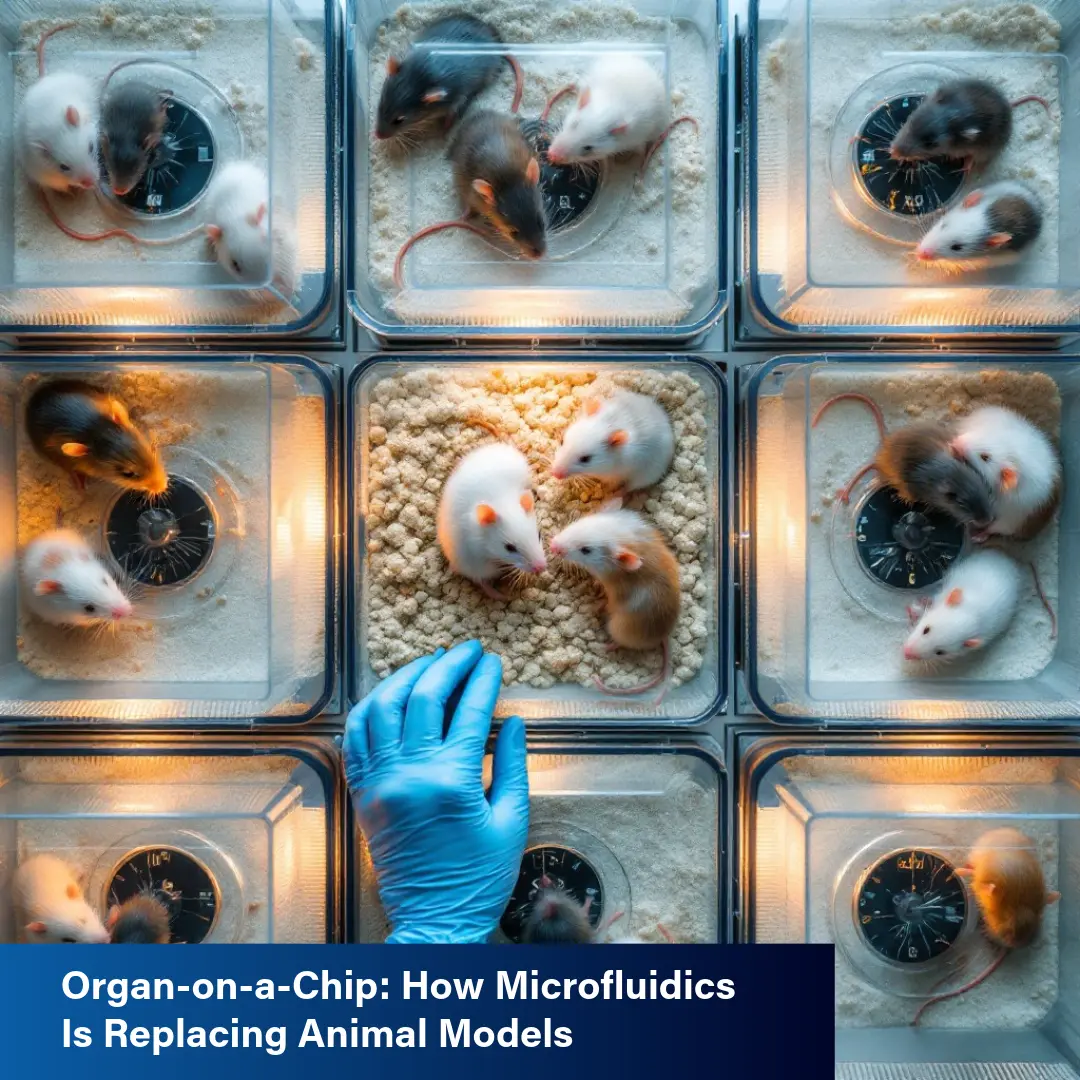
For decades, animal models have been a cornerstone of biomedical research. From testing new medicines to studying disease mechanisms, laboratory animals have played an essential role in advancing healthcare. Yet researchers have long recognised their limitations. Biological differences between animals and humans can make it difficult to predict how a drug will perform in clinical trials, while ethical concerns, regulatory pressures and the high cost of animal studies continue to drive the search for better alternatives.
One of the most exciting innovations to emerge from this effort is organ-on-a-chip technology. By combining microfluidics, tissue engineering, stem cell biology and advanced biomaterials, these miniature devices can replicate many of the functions of human organs with remarkable accuracy.
Although animal studies remain an important part of medical research, organ-on-a-chip systems are rapidly becoming a powerful complement ‑ and in some applications, a viable replacement ‑ for traditional animal models.
What Is an Organ-on-a-Chip?
An organ-on-a-chip is a small, transparent device, often no larger than a USB memory stick, that contains living human cells arranged to mimic the structure and function of a specific organ.
Tiny channels within the device allow nutrients, oxygen, drugs and other fluids to flow through the system, recreating conditions similar to those found inside the human body. These channels are typically measured in micrometres, giving rise to the term microfluidics.
Unlike conventional cell cultures grown in flat plastic dishes, organ-on-a-chip devices provide cells with a dynamic three-dimensional environment that more closely resembles living tissue.
Researchers have successfully developed chips that model:
- Lung
- Liver
- Heart
- Kidney
- Brain
- Gut
- Skin
- Bone marrow
- Placenta
- Blood vessels
More recently, scientists have begun connecting multiple chips together to create body-on-a-chip systems that simulate interactions between several organs simultaneously.
How Does Microfluidics Work?
Microfluidics is the science of manipulating extremely small volumes of fluid through microscopic channels.
Within an organ-on-a-chip, these tiny channels perform several important functions:
- Deliver nutrients to living cells
- Remove waste products
- Control oxygen levels
- Simulate blood circulation
- Generate mechanical forces experienced inside the body
- Deliver precisely measured doses of experimental drugs
Some devices even recreate physical movements found in living organs. Lung-on-a-chip models, for example, can rhythmically stretch and contract to imitate breathing, while gut chips reproduce the gentle motions involved in digestion.
These dynamic conditions allow cells to behave much more naturally than they would in traditional laboratory cultures.
Why Animal Models Have Limitations
Animal research has contributed enormously to medical progress, but it is not always a reliable predictor of human biology.
Many drugs that appear safe and effective in animals ultimately fail during human clinical trials because of differences in:
- Metabolism
- Immune responses
- Genetics
- Disease progression
- Drug absorption
- Organ function
In fact, a significant proportion of medicines entering clinical development fail despite promising results in animal studies.
Organ-on-a-chip technology aims to bridge this gap by using living human cells to generate data that may better reflect how patients respond to new therapies.
Advantages of Organ-on-a-Chip Technology
More Human-Relevant Results
Because these systems use human cells, they often provide more clinically relevant information than animal models.
Researchers can study:
- Human disease mechanisms
- Drug toxicity
- Drug metabolism
- Inflammatory responses
- Tissue regeneration
- Personalised medicine
This has the potential to improve the prediction of clinical success and reduce costly failures during drug development.
Reduced Animal Testing
The principles of the 3Rs ‑ Replacement, Reduction and Refinement ‑ have guided ethical animal research for many years.
Organ-on-a-chip technology directly supports these goals by reducing the number of animals required for many experiments and, in some cases, replacing them altogether.
As regulatory agencies increasingly encourage alternative testing methods, adoption of these technologies continues to accelerate.
Faster Drug Development
Traditional animal studies can take months or even years to complete.
Organ-on-a-chip experiments can often be conducted more quickly, allowing pharmaceutical companies to:
- Screen larger numbers of drug candidates
- Identify toxic compounds earlier
- Optimise drug formulations
- Reduce development timelines
Earlier identification of unsuccessful candidates can save millions of dollars during drug development.
Lower Costs
Drug development is one of the most expensive activities in science.
By improving the accuracy of early-stage testing and reducing reliance on lengthy animal studies, organ-on-a-chip systems may significantly lower research and development costs over time.
Personalised Medicine
One of the most exciting developments involves creating chips using cells taken directly from individual patients.
These personalised models may allow doctors to predict how a particular patient will respond to different treatments before therapy even begins.
Researchers are actively exploring this approach in areas such as:
- Cancer
- Rare genetic diseases
- Cystic fibrosis
- Cardiovascular disease
- Neurological disorders
Current Applications
Drug Discovery
Pharmaceutical companies increasingly use organ-on-a-chip platforms to evaluate:
- Drug safety
- Drug efficacy
- Dose optimisation
- Drug interactions
- Side effects
The technology helps identify unsuitable drug candidates before they enter expensive clinical trials.
Toxicology Testing
Chemical manufacturers, cosmetic companies and pharmaceutical developers use these systems to evaluate toxicity without relying solely on animal testing.
Liver-on-a-chip models are particularly valuable because the liver is responsible for metabolising many medicines and toxins.
Disease Modelling
Scientists can recreate diseases inside a chip to better understand how they develop.
Examples include:
- Alzheimer's disease
- Parkinson's disease
- Pulmonary fibrosis
- Asthma
- Cancer metastasis
- Inflammatory bowel disease
Researchers can observe disease progression in real time while testing experimental treatments.
Infectious Disease Research
During the COVID-19 pandemic, organ-on-a-chip technology helped researchers investigate how the virus affected the lungs, blood vessels, kidneys and other organs.
The ability to model human infection without relying exclusively on animal studies demonstrated the value of these platforms during rapidly evolving public health emergencies.
Challenges Still to Overcome
Despite remarkable progress, organ-on-a-chip technology is not yet a complete replacement for animal models.
Several challenges remain:
Complexity of the Human Body: Individual organs interact continuously through hormones, immune cells, nerves and metabolism.
Although multi-organ systems are improving rapidly, replicating the complexity of the entire human body remains a major scientific challenge.
Standardisation: Different laboratories often use different chip designs, materials and manufacturing techniques.
Greater standardisation will improve reproducibility and make it easier for regulatory agencies to compare results across studies.
Manufacturing at Scale: Producing reliable, high-quality chips in large numbers remains technically demanding.
As manufacturing technologies mature, production costs are expected to fall while consistency improves.
Regulatory Acceptance: Health authorities around the world are actively evaluating data generated using organ-on-a-chip systems.
Increasing regulatory acceptance will encourage wider adoption throughout the pharmaceutical industry.
A Growing Industry
The organ-on-a-chip sector has attracted significant investment from biotechnology companies, pharmaceutical manufacturers, universities and government agencies.
Advances in several complementary fields are accelerating innovation, including:
- Stem cell technologies
- Artificial intelligence
- Machine learning
- 3D bioprinting
- Advanced biomaterials
- Automation
- High-content imaging
These technologies are enabling more sophisticated models that can generate larger volumes of high-quality biological data.
As adoption increases, demand is also growing for professionals with expertise in microfluidics, biomedical engineering, tissue engineering, cell biology, bioinformatics, regulatory affairs and translational medicine.
Career Opportunities
The rapid expansion of organ-on-a-chip technology is creating exciting career opportunities across the life sciences sector.
Employers are seeking professionals in areas such as:
- Biomedical engineering
- Microfluidics
- Tissue engineering
- Cell biology
- Biomaterials
- Mechanical engineering
- Pharmaceutical sciences
- Toxicology
- Clinical research
- Quality assurance
- Manufacturing
- Regulatory affairs
- Commercialisation
As the industry evolves from research laboratories into commercial drug development, demand for multidisciplinary talent is expected to continue growing.
Looking Ahead
Organ-on-a-chip technology represents one of the most promising advances in modern biomedical research. While it is unlikely to eliminate animal studies entirely in the near future, it is already transforming how researchers investigate disease, develop medicines and evaluate safety.
By recreating key aspects of human biology in miniature, microfluidic systems offer the potential for more accurate research, faster drug development, lower costs and fewer animal experiments. As engineering, biology and data science continue to converge, organ-on-a-chip platforms are poised to become an integral part of the future of precision medicine and pharmaceutical innovation.
For researchers, employers and life sciences professionals alike, this rapidly evolving field offers exciting opportunities to contribute to a new era of more predictive, ethical and patient-focused biomedical research.